
Plastic packaging
Protect your product and your brand with antimicrobial plastic packaging: safety in every detail
Plastic packaging
Protect your product and your brand with antimicrobial plastic packaging: safety in every detail.
Attributes that go beyond what meets the eye
Conservação por toda a cadeia
Technology helps better preserve the characteristics of sensitive products, helping to maintain quality, freshness, and stability in packaging
Product safety
By ensuring microbiological control of packaging surfaces, the solution helps reduce the risk of cross-contamination and enhances protection in categories directly related to personal care and consumer goods
Safety for products intended for direct consumption
By ensuring microbiological control of the packaging surface, the solution helps reduce the risk of cross-contamination and enhances perceived protection in categories directly associated with personal care and consumer goods.
Perceived value
The solution transforms packaging into a technical and perceptible point of differentiation, enhancing the product experience and strengthening market positioning in categories where safety and preservation influence purchasing decisions
Key Features of the TNS Nano:
Application Engineering Team
Microbiology Laboratory
Marketing team
Resultados que comprovam performance
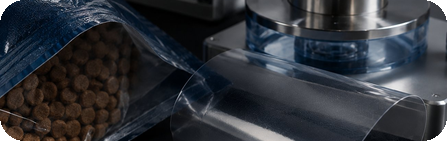
ASTM D3985
A method that measures the oxygen transmission rate in films and packaging, allowing for an assessment of the barrier’s effectiveness and its impact on product preservation.

ASTM F1249
Evaluates the water vapor permeability of flexible materials, indicating the packaging’s ability to control moisture and preserve sensory characteristics.
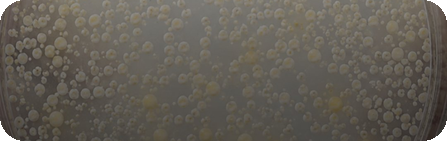
JIS Z 2801
A test that quantifies antimicrobial activity on surfaces by measuring the reduction in bacteria following contact with the treated material.
Frequently Asked Questions
This packaging incorporates antimicrobial technology directly into the material itself, helping to eliminate bacteria on the surface of the package. In practice, this enhances microbiological protection, helps preserve the product more effectively, and adds functional value in categories sensitive to preservation, such as dairy, fresh-cut produce, meat products, and pet food.
The technology is incorporated into the polymer during the manufacturing of the packaging. When microorganisms come into contact with it, such as Listeria monocytogenes, Pseudomonas, Salmonella, Escherichia coli, as well as yeasts and molds, antimicrobial additives work by eliminating these microorganisms on the treated surface, helping to preserve the product and reinforce protection throughout the supply chain.
Yes. By helping to protect the surface of the packaging and working in conjunction with the material’s structure, this technology can contribute to better preservation, greater stability, and reduced losses in product categories where antimicrobial protection and packaging performance directly impact shelf life.
No. It complements good manufacturing, filling, hygiene, and preservation practices, but does not replace standard process controls. The benefit lies in adding an extra function to the packaging, enhancing protection and preservation throughout the supply chain.
TNS Nano's solutions are compatible with various polymers used in industry, such as polypropylene (PP), polystyrene (PS), polyethylene (PE/LDPE), PVC, and polycarbonate (PC). In the masterbatch portfolio, compatibility also includes resins such as PP, PE, PS, ABS, PVDF, and polyacetal, among others, depending on the customer’s application and process.
Yes, but this definition must be validated based on the specific project. For food-contact applications, TNS Nano evaluates criteria such as polymer type, food-grade requirements, chemical restrictions, and applicable standards to recommend the most suitable solution with technical assurance.
The incorporation can be achieved using powdered additive or masterbatch, depending on the polymer, the application, and the customer’s production process. TNS Nano’s antimicrobial masterbatches are designed to facilitate incorporation into industrial manufacturing processes, with seamless integration into the production of extruded, injection-molded, or molded plastic parts.
Yes. TNS Nano’s solutions can be adapted to various industrial processes, depending on the material and application. The portfolio includes integration into polymer processing and applications in injection molding, rotomolding, and other industrial processes compatible with the project.
TNS Nano tailors the solution to the process your industry already uses, without adding a new production step. The work involves technical adjustments, formulation, and validation to ensure actual performance in the packaging.
TNS Nano’s approach is to incorporate functionality without compromising key material properties. These solutions can be integrated without affecting glossy or matte surfaces, color, durability, or resistance to cleaning solvents, subject to technical validation of the application.
The definition depends on factors such as the polymer of interest, manufacturing process, resin grade, melt flow index, viscosity, transparency requirements, food-grade requirements, chemical restrictions, and the standards the packaging must meet. This information helps TNS Nano recommend the solution best suited to your product and process.
For the preservation and barrier aspects, key references include ASTM D3985, which measures oxygen transmission in films and packaging, and ASTM F1249, which evaluates water vapor permeability in flexible materials. For antimicrobial activity on plastic surfaces, the reference on this page is ISO 22196, which quantifies antimicrobial activity on treated surfaces.
In addition to developing and validating the solution, TNS Nano supports the creation of materials, technical arguments, and marketing strategies to translate the technology into value recognized by the market.