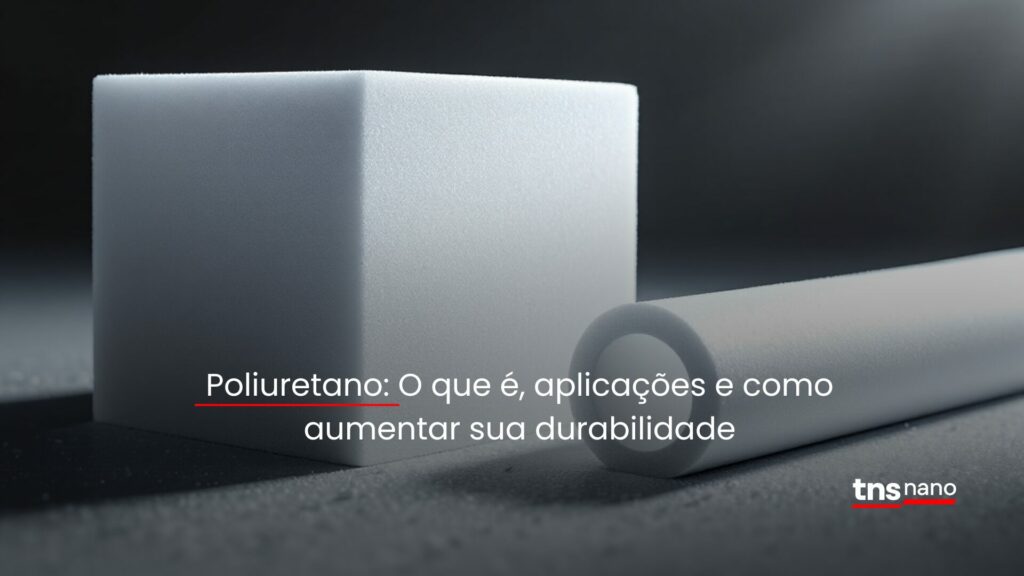
Polyurethane is a polymer formed by the reaction between a polyol and an isocyanate; it can be rigid or flexible. It is widely used in foams, coatings, footwear, furniture, and industrial applications due to its versatility and durability.
In this blog post, you’ll learn more about what polyurethane is, its main applications, and how to enhance its durability using antimicrobial technology.
What is polyurethane?
Polyurethane is a polymer formed by the chemical reaction between a polyol and an isocyanate. This material can be rigid or flexible, depending on the desired formulations and applications.
One of the most notable characteristics of polyurethane is its ability to form foams with different densities and properties, such as hardness, resilience, and moldability.
What is polyurethane foam?
Polyurethane foam is an expanded form of the polymer, characterized by its cellular structure, which can be open-cell or closed-cell. It is widely used in mattresses, upholstery, and thermal insulation, offering comfort, shock absorption, and lightness.
Common Types of Polyurethane Foam:
Flexible Foams: These are best known for their use in upholstery and mattresses. Their main property is the ability to deform under pressure and return to their original shape. The most common types are:
- Conventional Foam: This is the most common and versatile type of polyurethane foam. It is produced in a wide range of densities, from low to high, and is found in a wide variety of products, such as mattresses, furniture, and upholstery in general;
- High-Resilience (HR) Foam: Considered a high-tech material, it stands out for its durability, elasticity, and ability to provide support. It returns to its original shape more quickly than conventional foam. It is ideal for products that require greater durability and comfort, such as high-quality mattresses and automotive seats;
- Viscoelastic Foam: Commonly known as “memory foam,” its main characteristic is low resilience, meaning it deforms slowly and retains the shape of the object pressing against it for a few seconds. It conforms to the body, distributing weight and relieving pressure, and is widely used in pillows, high-tech mattresses, and hospital chairs.
- Rigid Foams: Unlike flexible foams, rigid foams are not designed to provide comfort, but rather to serve as insulation and structural components.
- Closed-Cell Foam: Most rigid foams fall into this category. Their closed-cell structure prevents air circulation, making them excellent thermal insulators. They are lightweight but have high mechanical strength, and are used in cold storage panels, roof insulation, and pipe ducts;
- Low-Density Foam: Although rigid foam comes in various densities, low-density foam is widely used for thermal and acoustic insulation because it is lightweight and efficient.
What is polyurethane leather?
Polyurethane leather, also known as synthetic PU leather, is a material consisting of a textile base coated with polyurethane. It is used as an alternative to natural leather in upholstery, footwear, and accessories, offering a similar appearance at a lower cost and with greater control over its properties.
What is polyurethane paint?
Polyurethane paint is a high-performance coating used to protect and finish surfaces. It offers high chemical, mechanical, and wear resistance and is commonly used in industrial, automotive, and marine applications.
What is polyurethane varnish?
Polyurethane varnish is a finish used to protect surfaces, especially wood, providing resistance to abrasion, moisture, and chemicals, while also enhancing the material’s appearance.
What is polyurethane made of?
Polyurethane is produced through a chemical reaction between a polyol and an isocyanate, and may include additives that modify properties such as flexibility, strength, density, and thermal stability.
Where is it used?
The polymer is used in various industrial sectors, for example:
Automotive Industry
In the automotive industry, polyurethane is used in seats, dashboards, interior trim, and insulation components.
The use of this material provides greater comfort, noise reduction, and excellent durability.
Polyurethane in mattresses and upholstery
The furniture industry uses polyurethane foam for its comfort and durability. Upholstered furniture and seating benefit from high-density foam, which provides greater support.
When it comes to mattresses, the choice of foam is crucial. Conventional foam is a cost-effective option, while high-resilience (HR) foam provides long-lasting support. Memory foam, on the other hand, molds to the body to relieve pressure points.
When it comes to pillows, conventional foam is used in basic models. Memory foam is popular because it conforms to the contours of the head and neck, providing pressure relief. For those looking for more consistent support, high-resilience foam is the ideal choice.
Polyurethane in the footwear industry
Polyurethane is used in the manufacture of soles and insoles because of its abrasion resistance, lightness, and flexibility, providing greater comfort to the end user.
Polyurethane in household goods
In everyday life, polyurethane is also used in items such as kitchen sponges. Thanks to their porosity and absorbency, polyurethane foams are ideal for cleaning dishes and surfaces, combining efficiency and durability.
Why enhance the durability of polyurethane?
Although polyurethane is highly resistant and durable, constant exposure to humid environments prone to the proliferation of microorganisms can adversely affect its properties, shortening its service life and causing economic losses.
Common challenges faced by polyurethane:
- The spread of fungi, mold, and mildew;
- Bacterial growth, which causes bad odors and hygiene problems;
- Physical deterioration due to constant exposure to adverse conditions.
Antimicrobial Technology: An Innovative Solution
To address these challenges, antimicrobial technology is applied directly to the polyurethane.
The technology offered by TNS Nano, for example, provides effective protection against fungi, bacteria, and viruses.
How Does TNS Nano's Antimicrobial Technology Work?
Antimicrobial technology works on three main fronts:
- Cell Membrane Disruption: TNS Nano’s antimicrobial agents penetrate and disrupt the membranes of microorganisms;
- Interruption of Nutrient Transport: blocks channels essential for the survival of microorganisms;
- Inhibition of Cell Replication: prevents cell division, ensuring continuous protection.
Benefits of Antimicrobial Technology in Polyurethane:
- Significant reduction in microbial growth (>99%, as verified by AATCC 100 and AATCC TM 211 standards);
- Effective control of unpleasant odors caused by bacteria;
- Longer shelf life of the final products, reducing waste and costs;
- Contributing to sustainability by reducing waste and the need for frequent disposal.
Practical Applications of Antimicrobial Technology
Polyurethane Foams
In the manufacture of mattresses and furniture, antimicrobial technology extends product lifespan, enhances the perception of hygiene, and increases comfort by protecting against microorganisms that cause respiratory illnesses and allergies.
Footwear
The use of antimicrobial treatments in footwear provides consumers with comfort, effective odor control, and a reduced risk of fungal and bacterial infections.
Hospital Sector
In medical and hospital settings, antimicrobial protection is essential to ensuring the safety of patients and healthcare professionals by preventing the spread of pathogens and reducing the risk of cross-contamination.
Communication and Validation of Antimicrobial Technology
The antimicrobial technology offered by TNS Nano is validated in accordance with rigorous international standards, such as AATCC and ABNT NBR, ensuring both effectiveness and safety.
Comprehensive Support for Partners
- Microbiology Laboratory: performs analyses and validations in accordance with international standards;
- Application Engineering Team: assists with the implementation and development of solutions;
- Marketing Team: supports the communication of benefits to end customers through communication strategies, co-marketing initiatives, and training programs.
Conclusion
Polyurethane is essential in many industries due to its versatile properties and high strength. However, ensuring its durability requires technological innovation.
Furthermore, the application of TNS Nano’s antimicrobial technology not only enhances its durability but also significantly contributes to the hygiene, safety, and sustainability of the products.
Take advantage of this technology to add even more value to your polyurethane products, protecting your brand and offering solutions that truly make a difference in people’s lives.
Frequently Asked Questions
Yes, polyurethane is a type of engineering plastic polymer with adjustable properties.
Yes, it offers high mechanical, chemical, and wear resistance, depending on the formulation.
Yes. In humid environments and under continuous use, this can promote microbial growth, which requires specific protective measures.
![[TNS Nano] Sustainability Report](https://tnsnano.com/wp-content/uploads/2023/05/Relatorio-anual-de-sustentabilidade-1.jpg)