
Efficiency in silage production is essential for livestock farming, which is why the trench silo—whether made of masonry, concrete, or similar materials—stands out as one of the best storage options. In fact, this structure is widely used due to its cost-effectiveness and efficiency.
With advances in technology, the use of specific additives, such as the TNS additive, has revolutionized the quality of silos and, consequently, the quality of the stored silage.
Find out how TNS Nano can maximize the results from your trench silo, what factors affect silo quality, and the differences and advantages of masonry and concrete silos, among other topics. Interested? Keep reading!
What is a trench silo?
In short, the trench silo is a key structure in silage production, widely used for storing fermented forage, a crucial source of feed for livestock, especially in winter or during dry seasons.
General characteristics of a trench-type silo
First, the main feature of this type of silo is its trench-like construction, dug directly into the ground.
This trapezoidal structure has sloped sides, which ensure high-quality silage compaction and prevent air from entering—a key factor in the anaerobic fermentation process.
How do you build a high-quality trench silo?
Building a high-quality trench silo is essential to ensure efficient silage preservation and proper nutrition for the herd.
Below are some key guidelines for the construction and management of trench silos:
1. Choosing a location
- Suitable site: Choose an elevated location with good drainage to prevent water from pooling and excessive moisture. Sites with a slight slope facilitate water runoff.
2. Correct sizing
- Calculating dimensions: Determine the size of the trench silo based on the number of animals, daily silage intake, and storage period. For example, a minimum withdrawal rate of 30 cm per day is recommended to prevent spoilage.
3. Construction of the structure
- Trapezoidal shape: Construct the silo with a trapezoidal cross-section, increasing the width at the top by 0.5 m for every meter of height compared to the base, thereby ensuring stability and facilitating filling.
- Wall cladding: Use materials such as masonry or concrete for the walls to ensure durability and minimize water infiltration.
4. Filling and compaction
- Even chopping: Chop the forage evenly to facilitate proper compaction and fermentation.
- Effective compaction: Compact the material in thin layers, using heavy-duty tractors, for example, to remove as much air as possible and promote efficient anaerobic digestion.
5. Proper sealing
- Covering with plastic sheeting: After filling, cover the silo with high-quality plastic sheeting; this is where TNS technology can be applied, ensuring that the edges are tightly sealed to prevent air and water from entering.
- Additional protection: Consider adding a layer of soil or heavy materials on top of the tarp to ensure a tight seal and protect against physical damage.
6. Silage Management
- Daily removal: During use, remove uniform slices at least 30 cm thick every day, avoiding prolonged exposure of the silage to the air.
- Continuous Monitoring: Regularly check the quality of the silage for signs of mold or spoilage, and adjust management practices as needed.
What are the advantages of a trench silo?
The trench silo offers a number of significant advantages for silage storage. Here are the main benefits that result in high-quality silage:
- Low construction costs: First , the construction of a trench silo is cost-effective, especially when built using soil. This makes it an affordable option for many farmers.
- Good compaction: The trapezoidal shape of the trench silo facilitates efficient compaction of the silage, thereby reducing the amount of air and improving feed preservation.
- Ease of use: Loading and unloading the trench silo is simple, making daily operations easier and faster.
- Less volume loss: Compared to above-ground silos, trench silos retain silage volume more effectively, minimizing losses.
- Storage efficiency: The sloped sides and bottom improve effluent drainage and make it easier to remove the silage.
- Lower consumption of cover film: requires less covering material compared to above-ground silos, reducing material costs
What factors affect the quality of silage?
To ensure that a trench-type silo produces high-quality silage, it is recommended to pay attention to the following points:
- Type of crop: Different crops and varieties have characteristics that affect fermentation and preservation. Crops such as corn, sorghum, and legumes are commonly used for silage due to their high dry matter and fiber content.
- Maturity: Harvesting the crop at the right time is crucial. Harvesting too early can result in low dry matter content, while harvesting too late can lead to a high fiber content, which impairs fermentation in the silo pit.
- Dry Matter Content (DM): The dry matter content of the plant must be within the ideal range (between 30% and 40% for corn). Too low a content can lead to inadequate fermentation and an increased risk of spoilage.
- Silo compaction: Proper compaction is essential for reducing oxygen levels and facilitating anaerobic fermentation. Poorly compacted silos can lead to spoilage and losses.
- Oxygen Control: Exposure to oxygen during and after the silo is sealed can cause aerobic spoilage. Therefore, using high-quality additives to create an effective barrier against oxygen is essential.
- Covering: Protect silage from water and adverse weather conditions using appropriate covers, as water infiltration can lead to mold growth and spoilage.
- Temperature: In addition to all of this, the temperature during fermentation and storage can affect the quality of the silage. Temperatures that are too high or too low can influence the fermentation process.
See – benefits of antimicrobial additives in the polymer industry
Masonry or concrete trench silos: what’s the difference?
Here are the main differences between these two types of trench-style silo construction:
Masonry trench silo
- Construction: The side walls are made of bricks or ceramic blocks, usually with a mortar finish.
- Advantages:
- Initial Cost: In some cases, the construction cost of a masonry trench silo is lower than that of a concrete trench silo, especially if materials are readily available locally.
- Thermal insulation: Masonry can provide better thermal insulation, thereby helping to maintain the internal temperature of the silage.
- Disadvantages:
- Durability: Masonry trench silos may be less durable than concrete silos, especially in humid environments or those exposed to the elements.
- Maintenance: In addition to all this, it may require more frequent maintenance due to potential cracks or wear in the mortar.
Concrete trench silo
- Construction: The concrete trench silo uses reinforced concrete for the walls and, often, for the silo floor.
- Advantages:
- Durability: It offers greater strength and a longer service life, withstanding harsh conditions and heavy machinery traffic more effectively.
- Hygiene: Concrete surfaces are easier to clean, reducing the risk of silage contamination.
- Waterproofing: reduced water permeability, protecting the silage from unwanted moisture.
- Disadvantages:
- Initial cost: The initial investment is generally higher due to the cost of materials and skilled labor.
- Construction time: A concrete trench silo may take longer to build, given the curing time required for the concrete.
Check out – 5 benefits of adding an antimicrobial additive to your product
Why use the exclusive TNS additive in the trench silo?
The TNS additive has proven to be highly effective in preserving silage quality compared to traditional methods. See below:
Loss reduction
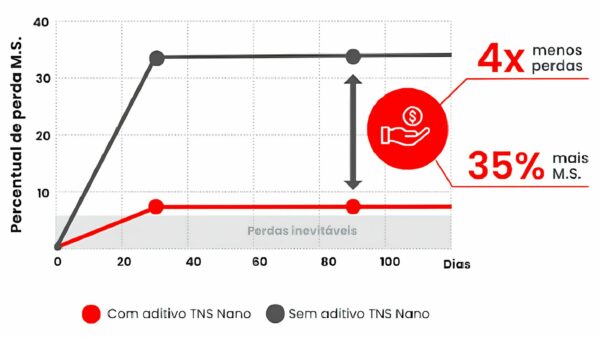
Losses during the silage-making process can reach up to 40% in the most severe cases and fall into two categories:
- Inevitable: respiration, fermentation, effluents, pre-drying, etc.
- To be avoided: spoilage, secondary fermentation, etc.
According to bromatological analyses conducted on corn silage, over a 90-day period, the silo treated with the TNS additive showed a dry matter loss of up to 8.12%, compared to approximately 35% for the traditional silo.
The silo treated with additives has 4 times fewer losses than the untreated silo.
High UV stability
Prolonged exposure to sunlight can rapidly degrade the quality of silage.
The trench silo with TNS additive offers high resistance to ultraviolet radiation, thereby extending the silo’s service life and maintaining the integrity of the silage, preventing premature nutrient degradation.
Weather and heat resistance
Adverse weather conditions, such as extreme temperatures and high humidity, can compromise the quality of silage.
The silage with additives demonstrates greater resistance to the negative effects of these variations and thus maintains stable conditions for silage fermentation.
Up to 3 times greater oxygen barrier
Initially, oxygen that penetrates the cover film can cause aerobic spoilage, leading to the proliferation of fungi and bacteria that break down the dry matter and nutrients in the silage.
The robust barrier in the trench silo provided by the TNS additive blocks up to three times more oxygen than a silo covered with traditional plastic sheeting.

Results obtained with the TNS additive
In the trials conducted, the dry matter retention in the conventional silo was 92.8 kg, starting from 142 kg of dry matter.
With TNS technology, the dry matter content of the trench silo reached 130.4 kg, increasing yield by more than 40% and producing high-quality silage.
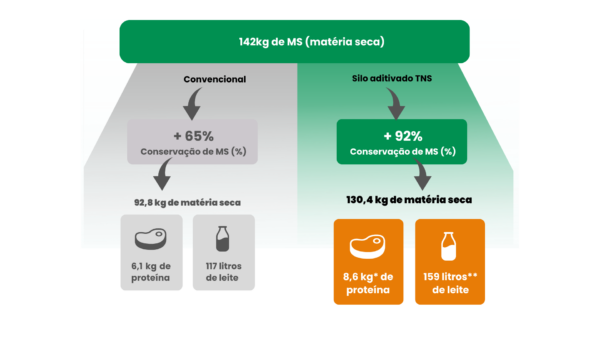
Results obtained using the method described in the Brazilian Compendium of Animal Nutrition (Year: 2017, Method No. 38), which ensures the accuracy of the data obtained.
* Note that 1 kg of dry matter is equivalent to 66 g of meat.
**Calculation using theoretical values:
FDN (Neutral Detergent Fiber) is calculated at 68%; 1 kg of NDT (total digestible nutrients) is equivalent to the production of 2.87 kg*** of milk
***Theoretical values based on Bayer data, reference: silage, episode 5.
In addition to dry matter, calculations indicate other positive aspects:
An increase of more than 35% in milk production;
An increase of more than 40% in protein production.
These improvements highlight the TNS additive as a highly effective solution for maximizing silage efficiency , thereby improving the quality and productivity of the ensiled material.
Maximize the efficiency of your trench silo with TNS Nano
We are a global leader in nanotechnology and innovation. Discover how our additives can raise the bar for your operations and ensure high-performance results for your products.
Contact us to learn more about how TNS Nano can make a difference for you!
![[TNS Nano] Sustainability Report](https://tnsnano.com/wp-content/uploads/2023/05/Relatorio-anual-de-sustentabilidade-1.jpg)