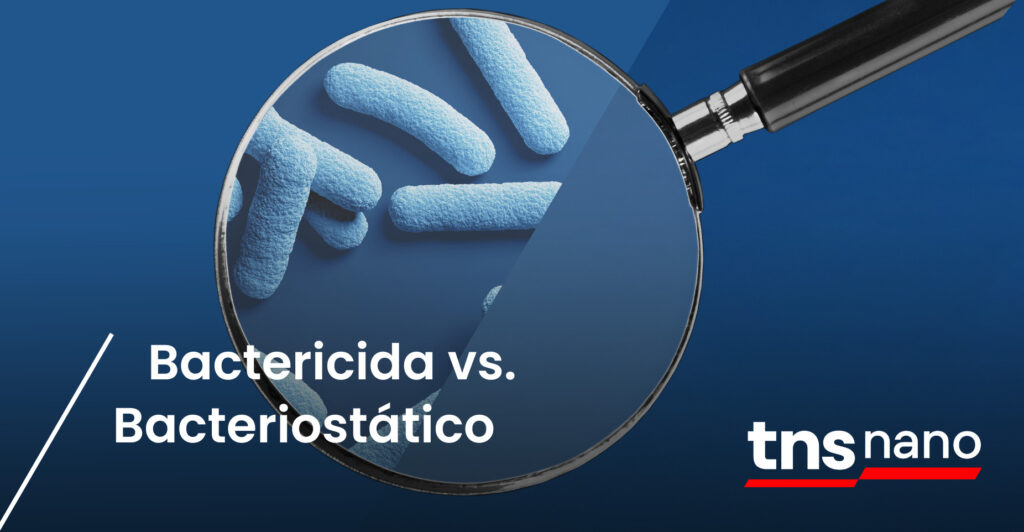
Products that combat bacteria are called antibacterial agentsand are generally classified as bactericidal, bacteriostatic, or bacteriolytic.
Although the names are similar, the definitions are directly related to the mechanism of action of these biocides.
What is a bactericide?
A bactericide is an agent or compound capable of killing bacteria—usually a chemical—thereby significantly reducing their proliferation.
How does a bactericide work?
A product is bactericidal when it kills bacteria (up to about 99.99%) through specific mechanisms that interfere with their vital processes, such as:
- Irreversible inhibition of DNA replication;
- Inhibition of bacterial protein synthesis;
- Increased cell wall permeability;
- Inhibition of cell wall synthesis.
What is the difference between a bacteriostatic and a bactericidal agent?
Products such as bacteriostatic are those that inhibit bacterial growth in the environment, requiring external action to eliminate them (a task performed by the immune system in the presence of infectious organisms in the human body).
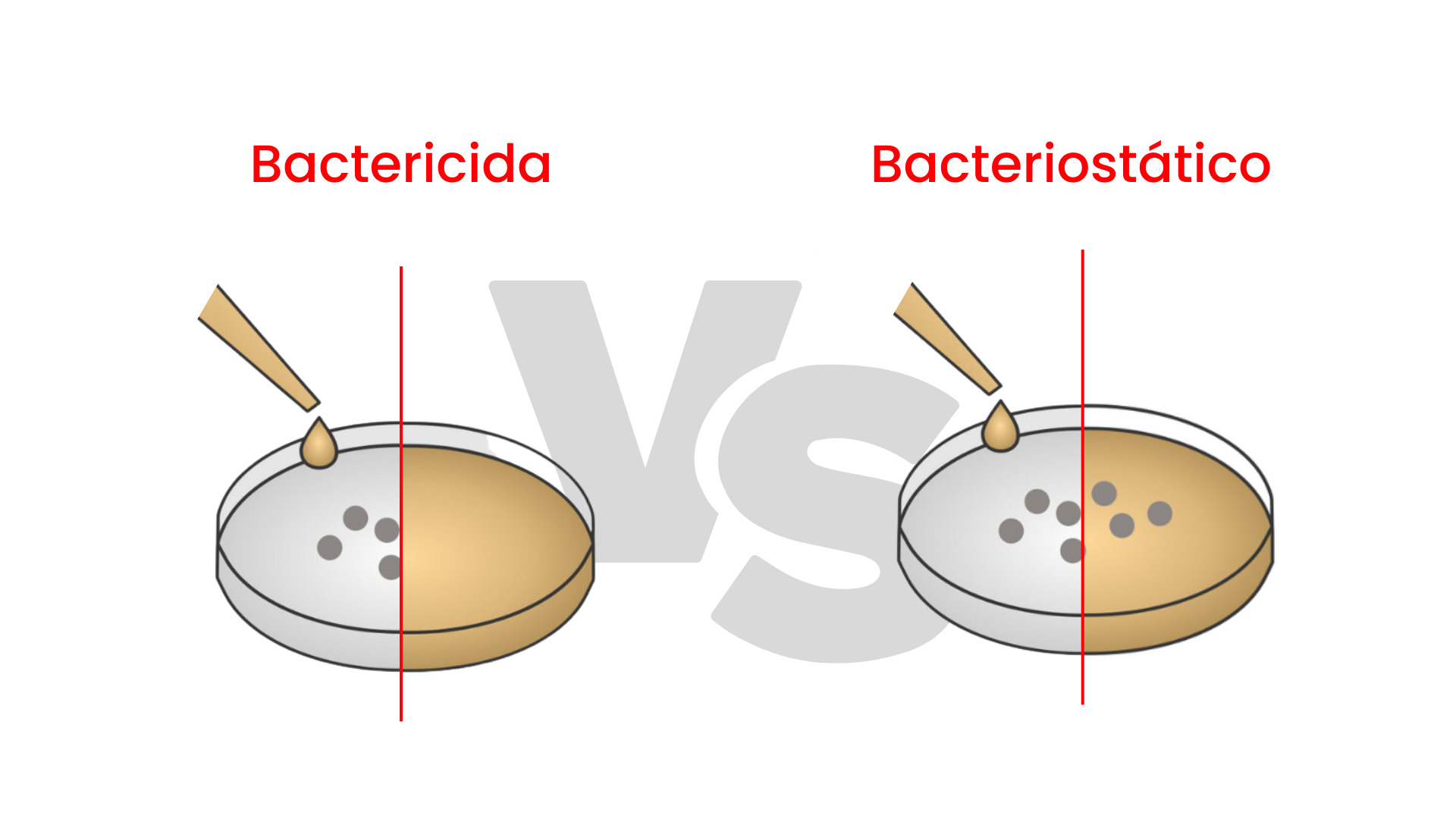
The bactericidal agents, in turn, not only kill active bacteria by preventing cell wall formation, they also eliminate already dead cells through a natural process called cell lysis—or the rupture of the bacterial cell.
Penicillin, for example, is classified as a bactericidal antimicrobial. Antimicrobials can be produced naturally by bacteria or fungi, or they can be entirely synthetic.
Classifying an agent as bacteriostatic or bactericidal is not such a simple task. As the saying goes, “it’s all in the dose.”
At sufficiently high concentrations, agents known as bacteriostatic agents can be potent enough to kill a large proportion of bacteria—and are therefore considered bactericidal.
Similarly, bactericidal products are applied in low concentrations and act by inhibiting bacterial growth rather than killing the bacteria, behaving like a bacteriostatic agent.
Therefore, it is extremely important to choose the right antimicrobial at the correct dose in order to maximize the effectiveness of the process of eliminating bacteria.
When is a bactericide recommended?
Bactericides are recommended whenever there is a risk of bacterial growth that could compromise the quality, safety, or durability of materials and surfaces.
It has a wide range of strategic applications across various industrial sectors, meeting both regulatory requirements and the performance needs of the final product.
Antibacterial agents in the hospital setting
Research into antibacterial agents has made significant progress, particularly in the medical and hospital sectors.
In this context, it is common to classify bactericidal, bacteriostatic, or bacteriolytic products as antiseptics, antibiotics, or disinfectants.
Antiseptics are products that can be used on human or animal bodies (skin, mucous membranes, etc.) and act on living tissue to prevent infections, sepsis, or putrefaction.
Antibiotics, on the other hand, antimicrobials are used selectively to treat and prevent bacterial infections.
Both antiseptics and antibiotics can act as bactericides or bacteriostats. As for Disinfectants are antimicrobial chemical agents applied to objects and surfaces to destroy microorganisms living on those objects.
The importance of these agents
The use of these disinfectants on surfaces in hospitals and clinics is of the utmost importance in preventing the spread of bacteria and infectious agents from a source to patients who are vulnerable to this type of contamination.
Is cross-contamination dangerous?
To better understand the severity of these cross-contaminations, WHO data show that one million of the 234 million patients who undergo surgery each year worldwide die as a result of hospital-acquired infections.
Meanwhile, 7 million patients experience postoperative complications. (Pan American Health Organization, 2010.)
In Brazil, the figures are even more alarming.
About 14% of patients contract hospital-acquired infections, and 62% of patients admitted to ICUs (Intensive Care Units) have some type of infection—which is most common in delivery units.
What methods should be used to eliminate bacteria in hospital settings?
Among the methods currently used to eliminate bacteria in hospital settings are antimicrobial products commonly known as, for example:
Hand sanitizer gel (hydrated ethyl alcohol);
Bleach (sodium hypochlorite);
Hydrogen peroxide for disinfecting floors and equipment.
Although no longer as popular, examples include products containing active ingredients with disinfectant and antibacterial properties, such as triclosan (a broad-spectrum antibacterial agent), quaternary ammonium salts, and biguanide.
However, these agents take effect immediately, so ongoing treatment for sterilization and disinfection is necessary to ensure a hospital environment free of cross-contamination.
Trends in antimicrobial agents
Alternatively, the use of materials containing antimicrobial agents (typically silver nanoparticles) is a trend that is likely to continue, thereby ensuring that these materials maintain their antimicrobial activity on their surfaces on a permanent basis.
See – 7 applications of nanotechnology
What materials might these assets be made of?
Materials found in common areas in hospitals, for example:
- Plastics: handrails , light switches, stretchers, doorknobs, etc.
- Ceramic tiles: floors, walls, and bathroom fixtures.
- Metals: instruments , beds, elevator buttons.
- Textiles: towels , bedding, uniforms.
They can be treated with silver nanoparticles to ensure long-lasting effectiveness against a range of pathogenic bacteria that cause infections.
Check it out – Antimicrobial flooring and laminates: why invest
How does nanosilver work?
First, nanosilver is effective even at low concentrations—precisely because of its nanoscale geometric structure, which exponentially increases the additive’s active surface area.
The mechanism of action is similar to that of a bactericidal compound: it attacks the surface of the bacterial cell membrane, penetrates the intracellular environment, and inhibits both bacterial respiration and DNA replication.
Finally, once inside the bacterium, the metal ions responsible for the final microbicidal effect are generated.
Add the antibacterial agent to your products with TNS technology
We are a global leader in nanotechnology and innovation. Discover how our additives can raise the standard of your operations and ensure high-performance results for your products.
Contact us and learn more about how TNS Nano can make a difference for you!
![[TNS Nano] Sustainability Report](https://tnsnano.com/wp-content/uploads/2023/05/Relatorio-anual-de-sustentabilidade-1.jpg)